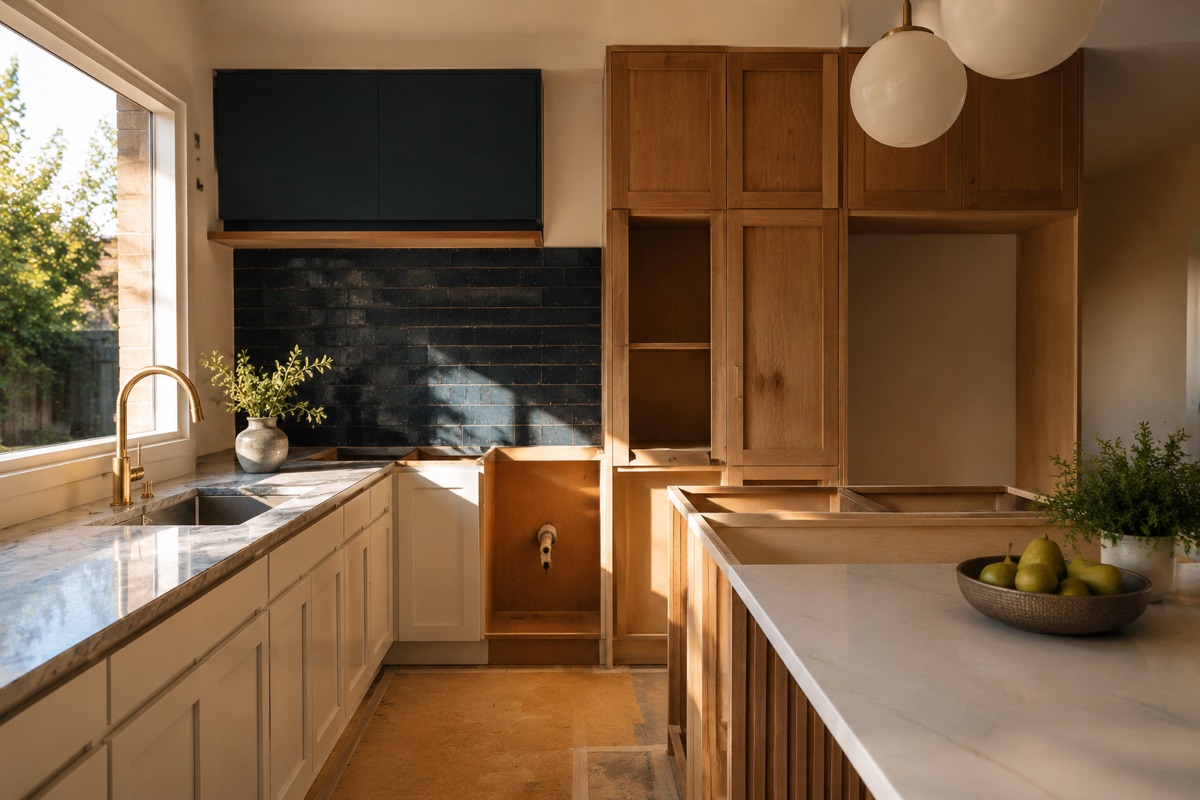
Why this single classification decision moves your tax bill by thousands
The Australian Taxation Office allows landlords to deduct property costs against rental income, but the timing depends entirely on classification. A REPAIR — work that restores an existing item to its prior condition — is deductible at 100% in the financial year incurred. A CAPITAL IMPROVEMENT — work that adds something new, betters the standard, or replaces an entire asset — must be depreciated over 25 to 40 years under Division 43 (capital works) or Division 40 (plant and equipment) of the Income Tax Assessment Act 1997.
The practical impact is substantial. Consider an $1,800 invoice. If correctly classified as a repair, the landlord deducts $1,800 in the year of expenditure, saving roughly $846 in tax at the 47% top marginal rate. If the same $1,800 invoice is correctly classified as a capital improvement under Division 43 at 2.5% per year, the landlord deducts $45 per year for 40 years — saving roughly $21 in tax per year. The total saving over 40 years is the same, but cashflow timing is dramatically different and most landlords never hold the property for the full 40-year depreciation life.
Mis-classifying capital as repair triggers the ATO's rental compliance program. The 2024-2026 ATO data-matching project targets landlord deductions over $3,000. Penalties include repayment of the over-claimed deduction, general interest charge around 11% per year, and an administrative penalty of 25-75% of the shortfall. A $12,000 bathroom wrongly claimed as repair can become a $20,000-$25,000 ATO bill three years later.
The authoritative source is the ATO — Rental property repairs, maintenance and capital expenditure guidance; read it once before EOFY. Our Rental Property Management Melbourne guide covers the operational framework this tax overlay sits on.
What counts as a repair — the immediate 100% deduction
A repair, in ATO terms, is work that restores an existing damaged or worn item to its prior condition using like-for-like materials. The defining features are: (1) an existing item that was working before, (2) damage, wear, or breakage through normal use or an event, and (3) work that returns the item to substantially its prior standard. Repairs are deductible in full in the year incurred under section 25-10 of the ITAA 1997.
Clear repair examples from Melbourne investment properties:
Plumbing. Replacing a leaking tap with a comparable tap, re-washering, clearing a blocked drain, replacing a section of damaged copper pipe with new copper, repairing a damaged toilet cistern mechanism.
Electrical. Replacing a blown light fitting, replacing a damaged power point, repairing a faulty switch, replacing a tripped circuit breaker with the same rating.
Painting. Repainting an interior wall that was previously painted, using comparable paint and finish. Touch-ups. Repainting external weatherboards previously painted.
Floor coverings. Patching damaged carpet using matching stock. Replacing one damaged floorboard. Re-stretching loose carpet.
Walls and ceilings. Patching plasterboard holes. Replacing a section of damaged cornice with matching profile. Repairing a ceiling after a roof leak.
External works. Replacing damaged fence palings with matching palings (where most of the fence remains). Replacing broken roof tiles with matching tiles. Repairing damaged gutter sections.
Appliances and fixtures. Repairing a built-in oven, dishwasher motor, or damaged drawer slide or door hinge — NOT replacing the unit.
The common thread is restoration. You had something working, it broke or wore, and you fixed it with comparable materials. The standard has not been improved. For the operational framework that drives these scenarios, see our tenant maintenance guide.
What counts as a capital improvement — the 25-40 year depreciation track
A capital improvement is work that adds something new, improves the standard above what existed, or replaces an entire structural component. Capital improvements are NOT deductible in the year of expenditure. They are added to the property's cost base and depreciated over their effective life — typically 40 years for structural works under Division 43, or 5-20 years for plant and equipment under Division 40.
Clear capital improvement examples:
Brand-new additions where nothing existed before. A new kitchen splashback where the wall was previously bare painted plaster. Ducted heating in a property with no central heating. A new pergola, deck, or carport. A new shed. A new ensuite carved from a bedroom. Solar panels.
Entire-asset replacement. A full kitchen renovation — even replacing a tired existing kitchen is capital because you are replacing the entire asset rather than repairing parts. A full bathroom renovation. A complete reroof. A complete rewire. A new hot water service replacing an entire failed unit.
Upgrading the standard. Single-glazed to double-glazed windows. Standard insulation to high-R-value. Laminate benchtops to stone. Vinyl flooring to engineered timber. Gas cooktop to induction.
Structural additions. Granny flat construction — ALWAYS a capital improvement, classed as a Division 43 structure with a 40-year effective life at 2.5% per year, occasionally 25 years at 4% per year for certain short-term traveller accommodation classifications. Second-storey additions. Ground-floor extensions. Garage conversions to living space.
Driveway, paths, retaining walls. New concrete driveway where there was gravel or none. New paving where there was none. New retaining wall.
Landscaping construction. New irrigation system. New fencing on a previously unfenced property. New garden beds and built-in features.
The granny flat case matters because it is the largest single capital improvement decision most landlords ever make. A typical $130,000-$220,000 Melbourne granny flat depreciates at $3,250-$5,500 per year under Division 43 plus another $4,000-$5,500 per year on Division 40 plant and equipment for the first 5-10 years — a combined year-1 deduction of roughly $7,500-$11,000. Our rental renovation guide for Melbourne landlords walks through how OptimaRea structures granny flat projects. The ATO depreciating assets and capital works guide is the authoritative reference.
The grey zone — replacing vs repairing an existing item
The clearest rule is the entire-asset test. Replace an ENTIRE item = capital. Repair PART of an item = repair. The line is sometimes blurry and this is where ATO audits focus.
Roof tiles. Replacing 6 damaged tiles after a storm = repair. Replacing the entire roof = capital. Replacing 60% of tiles because they were brittle = grey, leaning capital — the practical effect is renewal.
Fencing. Replacing 5 broken palings in a 30-paling fence = repair. Replacing the entire fence = capital. Replacing 20 of 30 palings in the same year = grey, leaning capital.
Hot water service. Repairing the gas valve = repair. Replacing the entire unit (even with an equivalent model because the old one failed) = capital. There is NO 'like-for-like exception' for entire-asset replacement.
Kitchen cabinetry. Repairing a broken drawer slide = repair. Replacing one damaged cabinet door = repair. Replacing all cabinet doors = grey, leaning capital. Replacing the entire kitchen = unambiguously capital.
Carpet. Patching with stock carpet = repair. Re-laying a whole room = capital. Re-laying the entire house = capital.
Windows. Replacing a broken pane in an existing frame = repair. Replacing a complete window unit = capital. Replacing all windows = capital (and typically also an upgrade).
Pipework. Replacing a 1-metre section of failed copper = repair. Replacing all pipework = capital. Repiping with PEX where it was copper = capital (and an upgrade).
Paint. Repainting a previously painted wall = repair. Painting a previously unpainted wall (raw plaster, after wallpaper stripped) = capital because you are bringing the property to a new standard. First-time exterior paint = capital. Subsequent repaints = repair.
The ATO test, articulated in TR 97/23 and reinforced in the rental property guidance, focuses on whether the work produced 'substantial improvement' or 'restoration of the prior state.' The simplified version: 'Did you fix something that broke, with comparable materials? Repair. Did you replace an entire asset, add something new, or upgrade the standard? Capital.' When unclear, the cost of getting it wrong tilts heavily towards classifying as capital.
The initial-repair trap — why your first 12 months are different
The most expensive classification error OptimaRea sees on new investment property purchases is the initial-repair trap. The ATO position, set out in TR 97/23 and reinforced in the rental property guidance, is that any repair-style work done in the first 12 months after settlement is generally NOT deductible as a repair. It is treated as bringing the property to a lettable standard rather than restoring damage that occurred while you owned it.
The logic: you purchased at a price that reflected the property's condition at settlement. Work done immediately after settlement is effectively completing the purchase rather than maintaining the investment. The fix is therefore capital — added to cost base, depreciable under Division 43 or 40, but NOT a year-1 deduction.
Worked example. A landlord buys a Cranbourne property for $620,000. The pre-settlement inspection identified a leaking shower, scuffed paint, and worn carpet. They spent $5,200 fixing these in the first 8 weeks. The ATO position is that ALL $5,200 is initial repair / capital — none is a year-1 deduction. The shower repair adds to cost base under Division 43. The repaint goes to capital works. The carpet is plant and equipment under Division 40 with a 10-year effective life. Year-1 tax saving: roughly $150 instead of the $2,440 the landlord assumed.
The rule has nuances. Damage clearly arising AFTER settlement (e.g. a storm in month 3 damaging the roof) is a normal repair. Genuine emergencies unrelated to pre-existing condition (e.g. burst pipe in month 2) can stand as repairs. The rule targets work the buyer always intended to do as part of acquiring the property.
The 12-month threshold is a practical shorthand rather than a strict test. The ATO looks at intent at acquisition and the nature of the work. Work in month 14 to fix a known pre-existing issue can still be characterised as capital. Work in month 11 to fix genuine post-settlement tenant damage can still be a repair.
Practical landlord rule: assume ANY work in the first 12 months on a known pre-existing condition is capital, not repair, unless your tax agent has confirmed it qualifies as a year-1 deduction. Plan cashflow accordingly. The way to minimise the trap is to negotiate pre-existing issues into the purchase price during contract negotiations, not absorb them as post-settlement 'repairs.' Our Rental Property Management Melbourne guide covers the inspection workflow we run for clients during purchase to surface these issues before settlement.
Worked examples — the numbers behind seven common landlord scenarios
The seven scenarios below are the ones OptimaRea sees most often. Dollar figures are illustrative at a 47% top marginal rate.
Scenario 1 — $1,800 repaint of existing painted walls. Walls previously painted; freshen before re-let. Classification: REPAIR. Deductible 100%. Year-1 tax saving: $846.
Scenario 2 — $1,800 new kitchen splashback where there was none. Never had a splashback; you added one to lift standard before re-let. Classification: CAPITAL IMPROVEMENT under Division 43 (40-year life, 2.5% per year). Year-1 deduction: $45. Year-1 tax saving: $21. The remaining benefit spreads over 39 future years.
Scenario 3 — $12,000 bathroom retile to fix water damage where existing tiles were the same standard. Water entered behind tiles, damaging substrate. You replaced like-for-like tiles and substrate. Classification: REPAIR — restoration with comparable materials. Year-1 tax saving: $5,640. The ATO will look closely, so keep the plumber's water-damage report, original tile match documentation, and before/after photos.
Scenario 4 — $12,000 bathroom transformation upgrade. Tired bathroom; you replaced tiles with higher-grade porcelain, installed frameless shower screen, stone-top vanity, LED mirror lighting. Classification: CAPITAL IMPROVEMENT — entire asset replaced and standard improved. Year-1 Division 43 deduction: $300. Year-1 tax saving: $141.
Scenario 5 — $4,800 new hot water service after old unit failed. 18-year-old unit replaced with comparable mid-range storage. Classification: CAPITAL — entire asset replacement. Division 40, effective life 12 years. Year-1 deduction: roughly $400. Year-1 tax saving: $188. Note: from 1 July 2017, second-hand depreciation rules mean buyers of established properties cannot claim Division 40 on existing items, only on items they personally install. If YOU install the new hot water service, you can claim it.
Scenario 6 — $180,000 granny flat construction. Always capital. Division 43 structure ($150,000) depreciates over 40 years at 2.5% = $3,750 per year for 40 years. Division 40 plant and equipment ($30,000) depreciates over 5-15 years on individual schedules = roughly $4,000 per year for years 1-5. Combined year-1 deduction: roughly $7,750. Year-1 tax saving: $3,643.
Scenario 7 — $850 invoice replacing 6 damaged roof tiles after a storm. Like-for-like replacement of part of an asset. Classification: REPAIR. Year-1 tax saving: $400.
The pattern is clear. Repair classification produces year-1 savings 4-25x larger than the year-1 saving on the equivalent capital classification. Over the full deduction life the total is the same (assuming constant marginal rate), but cashflow timing matters and almost no landlord holds for the full 40-year capital works life. Most properties turn over in 7-12 years, meaning most capital works deduction is never fully realised — it transfers to the recalculated cost base on sale and affects capital gains, not income tax.
Quantity surveyor reports — the $550-$880 spend that pays back in year 1
A depreciation schedule prepared by a qualified quantity surveyor is the single most cost-effective tax tool available to a Victorian landlord and the one most consistently under-utilised. The schedule itemises every depreciable asset (Division 43 structural elements and Division 40 plant and equipment) with effective lives, opening values, and year-by-year deduction amounts that flow straight into the rental schedule of your tax return.
The cost is typically $550-$880 for a Melbourne investment property, occasionally up to $1,200 for larger or more complex properties. The fee is fully deductible in the year of expenditure under section 8-1. The schedule covers all years until disposal or full depreciation, with no annual fee.
The payback in year 1 is typically 4-10x. A 15-year-old Melbourne property worth $750,000 generates roughly $4,000-$8,000 in first-year depreciation — saving $1,880-$3,760 in tax against an $800 outlay. A property under 5 years old generates $9,000-$16,000 in first-year deductions, saving $4,230-$7,520. A granny flat or recent extension increases the numbers further.
Most landlords without a schedule simply do not claim depreciation. They claim repair invoices, rates, management fees, insurance, and interest, then stop. The capital works deduction (2.5% per year on original construction cost, available even if the landlord did not build the property) and the plant and equipment deduction are entirely missed. Over a 10-year hold the missed deductions on a $750,000 property typically total $50,000-$80,000 of foregone tax savings.
Two considerations:
Qualifying buildings. Division 43 capital works is available on residential buildings constructed after 17 July 1985. Renovations and structural additions after 18 July 1985 qualify regardless of underlying building age. A pre-1985 weatherboard cottage with no major renovations does NOT qualify for Division 43 — but kitchen, bathroom, and extension renovations done in the intervening 40 years almost certainly DO qualify and the surveyor identifies them by inspection. Order the schedule even on older properties.
Second-hand plant and equipment. Since 1 July 2017, buyers of established properties cannot claim Division 40 depreciation on existing plant and equipment they did not personally install. This does NOT affect Division 43 (the bulk of the depreciation). It does NOT affect plant and equipment YOU install after purchase. The surveyor accounts for this in the schedule.
If you have not yet ordered a schedule for a post-1985 investment property (or any property with post-1985 renovation work), the next phone call should be to a quantity surveyor. BMT Tax Depreciation and Washington Brown are the two major Victorian providers; both are registered with the Tax Practitioners Board and produce ATO-compliant schedules. OptimaRea coordinates the inspection alongside routine property inspection so the landlord need not attend.
The OptimaRea workflow — flagging every $2K+ job and what to do at tax time
Internally, every job over $2,000 on an OptimaRea-managed property is routed through a classification flag before invoice goes to the landlord. The flag is one of three: 'likely repair' (deductible 100% year 1), 'likely capital' (depreciable), or 'grey — accountant review.' It is not a tax opinion — only the landlord's registered tax agent can deliver that — but it is a first-line categorisation that gives the accountant a head start.
Step 1: Classification at quote stage. When a contractor submits a quote over $2,000, the property manager assigns one of the three flags using the test framework in this article. The flag is recorded in our system and visible to the landlord through their portal.
Step 2: Pre-approval communication. For 'likely capital' and 'grey' classifications, the landlord receives a written note alongside the quote: 'This job is likely a capital improvement. Year-1 deduction will be limited to depreciation only (estimated $X). Let us know before approving if you want to defer or restructure for tax reasons.' This gives the landlord time to consult their accountant or restructure scope (e.g. split into a year-end repair and a new-FY capital improvement to optimise timing).
Step 3: Documentation chain. Every job over $2,000 generates a package: quote, scope of work, before-and-after photos, itemised invoice, and the flag. Retained for 7 years (the ATO retention requirement) and provided at EOFY.
Step 4: EOFY summary. Each June, OptimaRea generates a tax summary showing rental income, deductible expenses by category, capital expenditure with classification flags, and supporting documents. The landlord forwards directly to their accountant.
Step 5: Audit support. If the ATO selects a managed property for a rental compliance audit, OptimaRea provides the documentation chain on the landlord's behalf. We supported 11 ATO audits across the book in 2024-2025 with zero adverse outcomes.
The $2,000 threshold is deliberate. Below $2,000 misclassification risk is small (the ATO compliance program targets larger transactions). Across the OptimaRea book in 2025 we processed roughly 340 jobs that triggered the flag — 60% likely-repair, 30% likely-capital, 10% grey.
The key takeaway: classification is not optional, the ATO is paying close attention in 2026, and the difference between getting it right and wrong is measured in thousands per property. A quantity surveyor depreciation schedule, an OptimaRea-style classification workflow, and a registered property-specialist tax agent will protect against the most expensive errors. The ATO references are the rental property repairs, maintenance and capital expenditure page and the ATO depreciation guide. For consumer-level framing, ASIC MoneySmart's property investment guide is useful. Verify a tax agent or quantity surveyor through the Tax Practitioners Board public register.
If you would like OptimaRea to review your repair-vs-capital documentation, coordinate a quantity surveyor depreciation schedule, or run the $2,000 flagging workflow on your invoices, call us on (03) 9000 0000 or email management@optimarea.com.au.