The standard is 'reasonably clean' — not 'professionally cleaned'
End of tenancy cleaning Victoria is one of the most misunderstood obligations in the Residential Tenancies Act 1997 (RTA 1997). The statutory phrase is short: a tenant must leave the property in the same condition as at the start, fair wear and tear excepted. There is no clause demanding a 'professional clean', no statutory requirement to produce a receipt from a commercial bond-clean company, and no power for the landlord to dictate which cleaner the tenant hires.
The practical translation — repeatedly confirmed by the Residential Tenancies Bond Authority (RTBA) and the Victorian Civil and Administrative Tribunal (VCAT) — is the 'reasonably clean' standard. If the property was reasonably clean when the tenant moved in and the move-in condition report says so, the tenant must return it to the same reasonably clean state. If it was professionally cleaned and the condition report records that, the tenant must match that higher standard. The condition report is the baseline. The condition report decides the dispute.
The single most common landlord overreach goes like this: the property was rented out in a reasonably clean state — the condition report has ticks against 'clean' but no professional invoice attached — and at the end of the tenancy the landlord demands a $400 professional clean. The tenant arranges a $120 thorough domestic clean instead, and the landlord lodges a bond claim for the $280 difference. VCAT almost always sides with the tenant. The 'reasonably clean' state was returned; there is no statutory hook for the extra $280, and the claim is rejected. The bond is not a vehicle for upgrading the property at the outgoing tenant's expense.
For the official position, read Consumer Affairs Victoria — Cleaning at the end of the tenancy (https://www.consumer.vic.gov.au/housing/renting/repairs-alterations-safety-and-pets/repairs/end-of-tenancy-cleaning). This guide unpacks the standard, the categories a tenant must actually clean, the items they do not have to touch, the 2026 Melbourne cost benchmarks, and the evidence pack the RTBA needs before it will release a dollar of bond money for cleaning.
The condition report is your only baseline — protect it
Everything in a Victorian end-of-tenancy cleaning claim flows from one document: the move-in condition report. The RTA 1997 requires the landlord (or managing agent) to provide a completed condition report at the start of the tenancy. The tenant has three business days to mark it up, add comments and photos, and return a signed copy. The version signed by both parties is the legal baseline against which the move-out condition is measured.
Done well — every room described, cleanliness noted item-by-item, dated photographs annexed — the condition report is unbeatable evidence. Done badly — single-word entries like 'OK', no photos, only the landlord's signature — it functionally surrenders the right to claim cleaning costs. VCAT cannot tell whether the splashback was spotless or stained when the tenant moved in, so it gives the tenant the benefit of the doubt and the deduction is refused.
The practical rule for Melbourne landlords: complete the move-in condition report as if the property were heading to VCAT tomorrow. Every room, every angle, every fixture. If the property has been professionally cleaned, attach the cleaner's invoice and tick 'professionally cleaned' next to each room. Otherwise tick 'reasonably clean' — do not overstate the baseline, because overstating it just hands the next tenant an easy defence. The end-of-tenancy game is comparing the same angles at move-out to the move-in photos. Without those photos, the comparison is impossible.
For the OptimaRea inspection workflow — photo protocol, condition report template, handling of disputed entries during the 3-day mark-up window — see our rental property management Melbourne guide.
What the tenant MUST clean — the checklist
Under the 'reasonably clean' standard and the established line of VCAT decisions, a Melbourne tenant ending a tenancy is expected to clean the following categories. Each is enforceable provided the move-in condition report shows the relevant item was in clean condition at the start.
Carpets. Vacuum thoroughly throughout. Professional steam cleaning is not automatically required. The exception is where the move-in condition report explicitly records that the carpets were professionally steam cleaned and the cleaner's invoice is attached — in that case, the tenant must return them to a professionally cleaned state and a steam-clean invoice is the standard evidence. Tick 'professionally cleaned' without attaching the invoice and expect the tenant to challenge it.
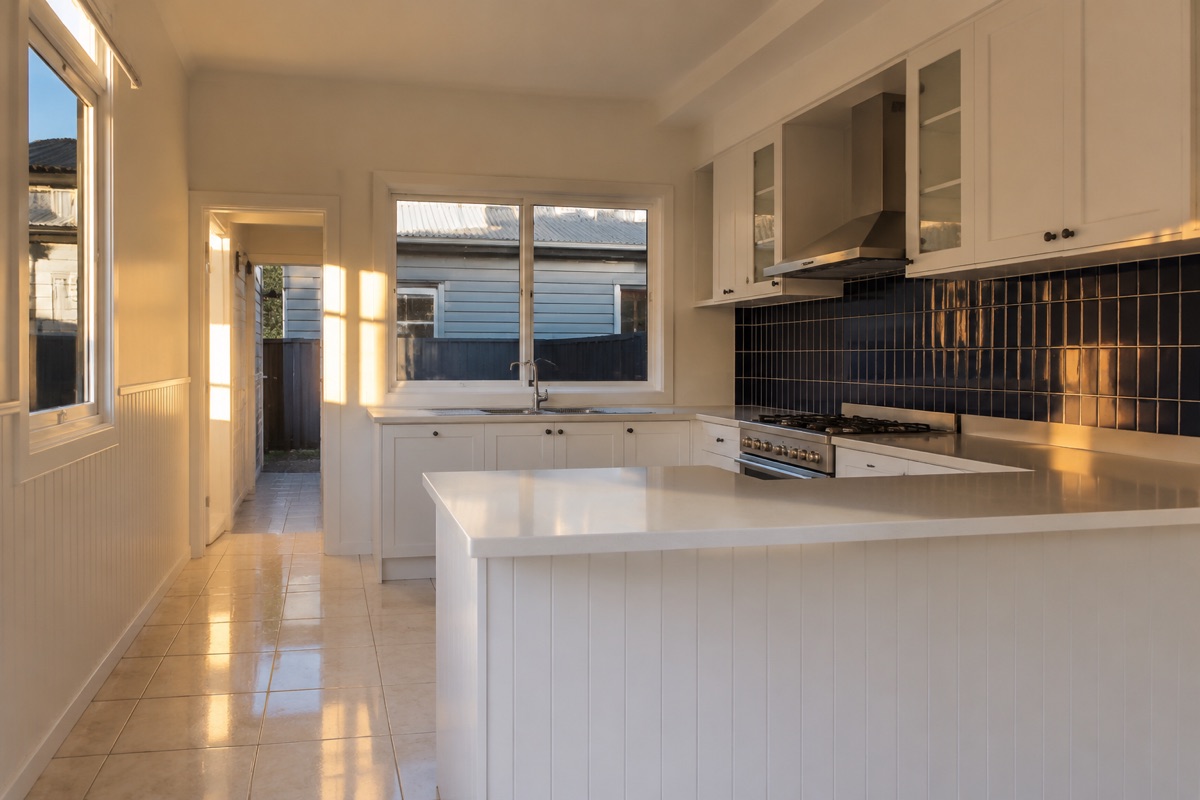
Kitchen. Wipe down all benches, cupboards (inside and out), and the splashback. Clean the oven internally — racks, glass door, walls. Clean the stovetop including under the burners. Wipe the exhaust hood and degrease the filter. Clean the sink and taps. Sweep and mop the floor.
Bathrooms. Scrub the toilet inside and around the base. Clean the sink, vanity, tapware, and mirror. Clean the shower screen and tiles, focusing on soap scum and visible mould — provided the mould is not caused by a ventilation defect the landlord is responsible for under the RTA 1997 (see Tenants Victoria — repairs (https://tenantsvic.org.au/advice/during-your-tenancy/repairs/) for the dividing line). Wipe the exhaust fan grille. Sweep and mop the floor.
Walls. Free of marks beyond ordinary wear and tear. Light smudges around switches and faint marks at couch height are wear and tear and not the tenant's responsibility. Heavy gouges, crayon, large stains, or marks that require painting to remove are damage and a different category.
Floors. Hard floors swept and mopped. Carpets vacuumed (and steam cleaned only if the condition report demands it). Spot stains matching a clean condition report entry should be addressed — typically with a spot clean rather than a full replacement.
Windows — interior. Interior glass and frames wiped. Sills and tracks dusted. Standard expectation in any Victorian end-of-tenancy clean.
Windows — exterior. Generally NOT the tenant's cleaning obligation, particularly on upper floors, balconies, or anywhere safe access requires a ladder. Treated as wear and tear the landlord recovers via the rent, not the bond.
Garden and outdoor areas. Where the tenant has had use of a garden, the standard expectation is to mow the lawn, sweep paths, remove rubbish, and leave garden beds as at move-in. Pruning back overgrowth the tenant allowed to develop is reasonable; restoring a garden already overgrown at move-in is not.
For the borderline between cleaning, maintenance, and damage during the tenancy itself, see our tenant maintenance guide.
What the tenant does NOT have to clean (and where landlords overreach)
Equal in importance to the must-clean list is the list of items a Victorian tenant does NOT have to clean or restore. Each is a category where Melbourne landlords routinely overreach, lodge a bond claim, and lose at the RTBA or VCAT.
Carpets to a higher standard than start. If the move-in condition report records the carpets as 'reasonably clean' without a steam-clean invoice attached, the tenant only has to vacuum and return them to the same reasonably clean state. They do not have to produce a steam-clean invoice, professionally deodorise, or hand back carpet fresher than what they received. Demanding a steam-clean invoice in this situation is the single most common bond clean overreach in Melbourne.
Walls repainted. Repainting is wear and tear or a landlord capital expense, not a cleaning obligation. A tenant cannot be required to repaint scuffed walls at the end of a multi-year tenancy. Where the wall has genuine damage — a 20cm gouge, crayon stripped paint, water damage from a tenant-caused leak — that is a damage claim, itemised separately, not 'cleaning' dressed up.
Exterior windows at height. The tenant is not obliged to climb a ladder or hire a window cleaner to access first- or second-floor exterior glass. Landlord maintenance recovered through the rent.
Items not on the condition report. If a fixture or surface was not itemised at move-in — the inside of the rangehood ducting, the back face of the toilet cistern — the tenant has no obligation to clean to a standard the condition report never set. No baseline, no comparison, no RTBA deduction.
Pre-existing dirt or damage. Anything the move-in condition report and photos already showed as dirty or damaged is the landlord's problem. This is why the report cannot be 'optimistic' — overstating the baseline simply hands the tenant a defence.
Mould caused by structural defect. Where mould is caused by inadequate ventilation, leaks, or rising damp — all landlord responsibilities under the RTA 1997 — the tenant cannot be charged for removal. Where mould is caused by the tenant blocking vents or drying clothes inside without extraction, the tenant may be liable, but the landlord has to prove cause.
'Professional' clean where the start state was 'reasonable'. Restating the headline rule: if the property was rented out in a reasonably clean state, the tenant returns it reasonably clean. They do not have to upgrade to a professional clean to meet the landlord's preferred standard.
2026 Melbourne cleaning cost benchmarks — what's reasonable
When a tenant declines to clean, or cleans inadequately, the landlord's remedy is to arrange the work and claim the actual cost against the bond. The RTBA allows only a reasonable, market-rate cost, evidenced by a quote and a paid invoice. Inflated invoices are reduced; quotes without invoices are reduced to the lowest reasonable rate.
The following benchmarks reflect Melbourne metropolitan end-of-tenancy cleaning prices observed across OptimaRea-managed properties in early 2026.
Standard 3-bedroom end-of-tenancy clean. $250 to $450 plus GST. Covers kitchen, bathrooms, internal windows, floors swept and mopped, interior dusting, and carpet vacuuming. A 2-bed apartment sits at the lower end; a larger 3-bed house at the upper end.
Same clean plus carpet steam clean. $350 to $650 plus GST. The steam clean adds typically $90 to $200 depending on area and number of bedrooms.
Same clean plus oven and rangehood deep clean. $400 to $700 plus GST. Oven deep cleaning is the most labour-intensive item in any bond clean — where the oven has been neglected for an extended tenancy, the deep clean alone can be $150 to $250.
Garden tidy-up. $150 to $400 depending on garden size and overgrowth. Lawn mowing and edge trimming at the lower end; significant pruning and rubbish removal at the higher end.
Window cleaning, interior only. $80 to $200 for a typical 3-bedroom property. Most end-of-tenancy quotes already include interior windows.
The rule for a defensible bond claim: get two or three quotes before you commission the work, use the median as your benchmark, and pay by bank transfer with a clear invoice number. A landlord who pays $480 and lodges a $480 invoice is on solid ground. A landlord who pays $480 but submits a $720 quote to the RTBA is asking for a reduction — RTBA and VCAT pay the actual paid amount, not the quoted amount, when both are on file.
'Bond clean' clauses in the lease — what's enforceable
A common drafting tactic in Victorian leases — particularly in older REIV-style precedents and DIY templates — is a clause requiring the tenant to 'engage a professional bond cleaning service and provide a paid invoice'. These clauses are popular but their enforceability is limited by the RTA 1997.
The core legal issue is that the RTA 1997 voids any term in a tenancy agreement that purports to impose obligations beyond what the Act allows. The 'reasonably clean' standard is the statutory floor and ceiling. A lease cannot contractually convert that into a 'professionally cleaned' obligation because doing so would extract more from the tenant than the Act permits.
In practice: a 'professional bond clean' clause is not directly enforceable as a separate ground of deduction. The RTBA will not authorise a deduction simply because the tenant failed to engage a professional cleaner — the question is always whether the property was returned in 'reasonably clean' condition compared to the move-in baseline. The clause may still work as a procedural prompt (many tenants comply assuming it is binding), but you cannot rely on it at VCAT.
The sharper drafting approach OptimaRea uses is to attach the move-in condition report and the cleaner's invoice as schedules to the lease, then describe the end-of-tenancy obligation as 'returning the property in the same clean condition as at the start of the tenancy, in accordance with the attached condition report'. This anchors the standard to a verifiable baseline rather than a vague 'professional' adjective, and does no more than restate the statutory obligation. A tenant taking advice from Tenants Victoria (https://tenantsvic.org.au/) will spot an overreaching clause immediately and use it as their primary defence — stick to the statutory standard and let the evidence do the work.
The evidence pack that survives an RTBA dispute
A successful end-of-tenancy cleaning claim in Victoria rests on a five-piece evidence pack. Filing without one of them is filing a claim that will likely be reduced or rejected when the tenant disputes it.
1. Signed move-in condition report. Dated, signed by both parties, with cleanliness recorded item-by-item. Where the property was professionally cleaned at move-in, the cleaner's invoice must be attached. The baseline. Without it, the claim is dead on arrival.
2. Move-in photographs. Timestamped, taken on the day of the move-in inspection, from the same angles you will replicate at move-out. Cover every room, every appliance, every surface that might later be the subject of a claim.
3. Move-out condition report and photographs. Dated, ideally signed by the tenant where they attend the final inspection. Photographs from the same angles as the move-in set. The side-by-side comparison is the highest-leverage piece of evidence in any bond claim.
4. Tenant quote. A written quote from the cleaning contractor, dated before the work begins, itemising the scope and price. Two or three quotes are better than one because they evidence market rate and rebut any tenant argument the chosen quote was inflated.
5. Paid invoice. Matching the scope of the quote, dated after completion. Pay by bank transfer with a clear reference. The RTBA pays the actual paid amount, so the invoice is your ceiling. A quote without a matching invoice is reduced to a reasonable market rate.
Common RTBA rejection patterns to avoid: claims that do not match the condition report baseline; demands for professional cleaning where the start state was only 'reasonably clean'; retroactive repair work disguised as cleaning (repainting because of scuffs, replacing carpet because of stains a steam clean would have removed); itemised claims with no corresponding photo or invoice.
For escalation where the tenant disputes and the matter is referred to VCAT, see our VCAT landlord guide. REIV publishes recommended end-of-tenancy cleaning checklists for member agents (https://reiv.com.au/), and Tenants Victoria publishes the tenant-side perspective — reading both before finalising your claim is a small investment with a large return.
How OptimaRea runs end-of-tenancy cleaning for landlord clients
OptimaRea's end-of-tenancy cleaning workflow is designed to resolve the cleaning question at the RTBA stage — ideally via a joint bond claim signed by both parties — rather than at VCAT. The economics are simple: a disputed claim that reaches VCAT costs the landlord 8 to 12 weeks of held funds plus several hours of preparation, in exchange for a recovery usually under $500. Avoiding the dispute is worth more than winning it.
The workflow has four steps. First, move-in: we complete the condition report on a tablet with the tenant present, room-by-room, photographing every angle, and either attach the professional cleaner's invoice or tick 'reasonably clean' with photographs as evidence. The tenant has their statutory 3 business days to mark up the report; we confirm receipt of their version before locking the baseline.
Second, routine inspections: every six months we revisit the property and photograph it, building a longitudinal record of cleanliness across the tenancy. This identifies maintenance issues early and provides a continuous photographic baseline that disrupts any later tenant argument that the dirty state was pre-existing.
Third, move-out: we attend in person with the tablet loaded with the move-in condition report and the routine inspection photos. We walk room-by-room, photograph the move-out state from the same angles, and where cleaning is required we provide the tenant with two cleaning quotes on the spot. The tenant chooses: arrange the cleaning themselves to a 'reasonably clean' standard within five business days, or authorise us to engage one of the quoted cleaners with the cost deducted via a joint claim.
Fourth, the bond claim: where the tenant authorises a deduction, we file a joint claim with the RTBA and funds release within 14 business days at the agreed split. Where the tenant disputes, we file a single landlord claim with the full evidence pack and let the 14-day RTBA notice run. We escalate to VCAT only where the disputed amount and the evidence both justify the wait.
If you are a Melbourne landlord ending a tenancy and looking at a dirty property — or planning ahead — call OptimaRea on (03) 9989 9999 or email hello@optimarea.com.au. The full property management service is described in our rental property management Melbourne guide.