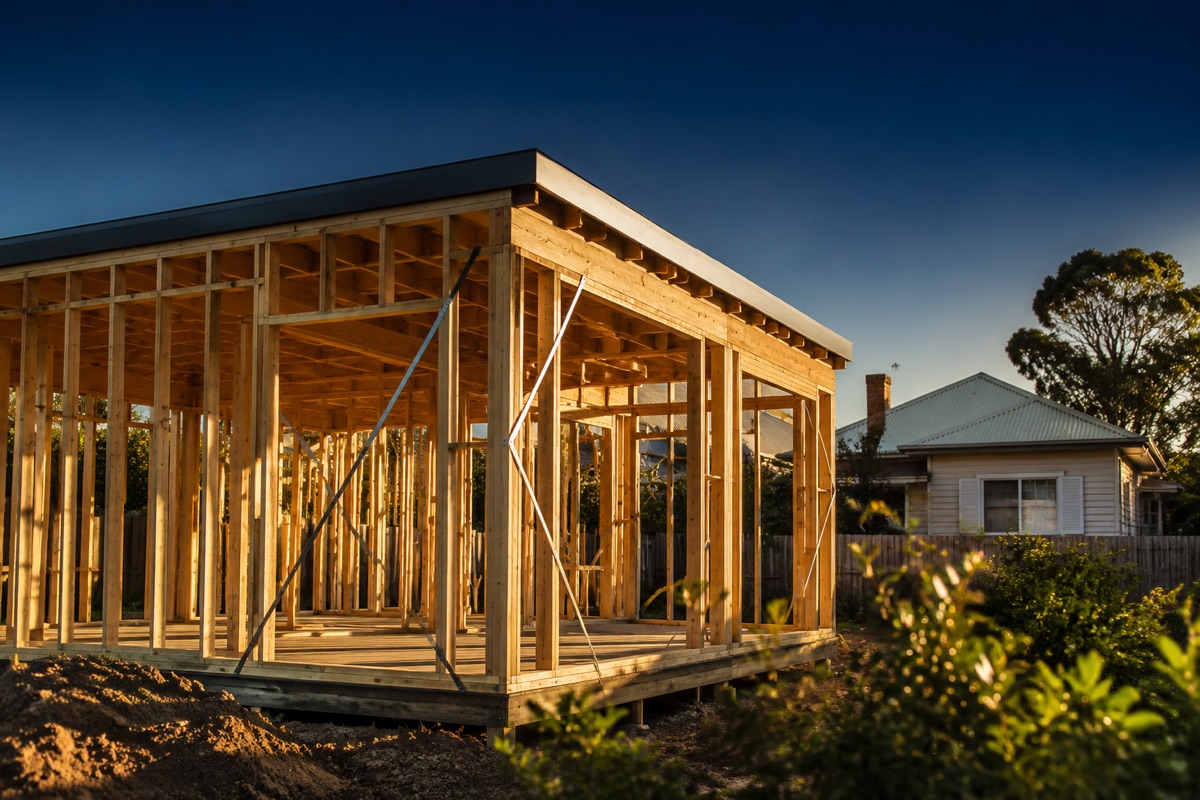
The 2021 SSD reform — why a granny flat permit Melbourne in 2026 looks nothing like it did five years ago
Before September 2021 a granny flat permit Melbourne project was a fight. Every secondary dwelling — whether you called it a dependent person's unit, a granny flat, or an ancillary dwelling — needed a full planning permit issued by the local council under the relevant planning scheme. That meant neighbour notification, a public objections period, a Responsible Authority decision that could be appealed at VCAT, and a start-to-handover timeline north of 12 months. Plenty of reasonable proposals were killed at the objections stage by neighbours who simply did not want a 'rental unit' next door.
The 2021 reform to the Victoria Planning Provisions introduced a new pathway: the Small Second Dwelling (SSD). Under the reform, a secondary dwelling that meets a specific set of criteria — under 60 square metres of gross floor area, single storey, one dwelling per lot, on a lot of a defined minimum size, within the building envelope, meeting ResCode setback and overshadowing rules, and not in a 'no-go' overlay — is planning-permit exempt. You do not lodge a planning application. There is no objections process. There is no neighbour notice. The only statutory approval you need is a Building Permit, issued by a private VBA-registered Building Surveyor, just like any other building works.
This is the single biggest change to suburban residential investment math in a generation. A standard 3-bedroom Cranbourne or Frankston house on a 600sqm lot, leasing for $560/week, becomes — with a 50–55sqm SSD in the backyard — a $920/week dual-living property. We covered the post-build management of that exact configuration in our granny flat rental management guide for Melbourne dual-living landlords. What follows here is the front half of the journey: getting the permit, getting the build done, and avoiding the traps that still kill SSD projects in 2026.
Step 1 — Eligibility check: lot size, zoning, overlays, and the silent killers
Before you spend a dollar on drawings, run the eligibility test. The SSD pathway is generous but it is not unconditional, and a property that fails any one of the gates below cannot be built under the planning-permit-exempt route — it falls back into the normal planning permit pathway, with all the cost and delay that implies.
Lot size minimum. Council-dependent and the variable most landlords misread. The state-level VPP rule references a minimum lot size, but each council applies a slightly different floor through its local schedule. As a working rule for 2026: most outer-east and south-east councils (Casey, Cardinia, Frankston, Greater Dandenong, Knox, Maroondah) accept SSD on lots from 550sqm upwards. Some inner-middle councils require 650sqm or larger. Always read your specific council's planning scheme local schedule before you commit to a design.
Single dwelling per lot. The SSD must be the only secondary dwelling on the title. If you already have a converted garage with a kitchenette serving as a granny flat, you cannot add a second SSD alongside it under this pathway.
Single storey. Two-storey granny flats are not eligible for the SSD planning-exempt pathway and fall back into a standard planning permit application.
60sqm GFA cap. Gross floor area is measured to the outside of external walls, including internal walls and stairs, excluding external decks, eaves, and pergolas. A common builder pitch is the '55sqm two-bedroom plus 12sqm covered deck' design that maximises usable space inside the 60sqm GFA limit. Anything above 60sqm GFA pushes you out of SSD territory and back into a planning permit.
Zoning. SSD applies in standard residential zones — General Residential (GRZ), Neighbourhood Residential (NRZ), and Residential Growth (RGZ). Mixed-use, township, and rural zones have their own rules and most are not SSD-eligible.
Overlay blockers — this is where projects die. Heritage Overlay almost always blocks SSD because heritage protection requires a planning permit for any new building works regardless of size. Flood Overlay (FO) restricts SSD because the dwelling must be designed above the flood planning level, which triggers a planning permit. Bushfire Management Overlay (BMO) does not block SSD outright but requires defensive zones, ember-protection construction, and water-supply provisions, adding $15K–$40K to the build cost. ESO, EMO, DDO, and LSIO each require specific assessment.
Before you spend on design, pull the property's full planning report from the Victorian Government's planning maps service and read every overlay listed against the title. A single Heritage Overlay can kill an entire SSD plan and you want to know on day one, not month three.
Step 2 — Soil report and feature survey ($800–$1,500)
Once eligibility is confirmed, the first technical step is engaging a registered surveyor for a feature and level survey of the rear yard and a geotechnical engineer for a soil classification report.
Feature and level survey maps every existing feature on the site — boundary fences, existing structures, large trees and their canopy spreads, services (sewer manholes, stormwater pits, electricity pole positions), and ground levels. Expect to pay $600–$1,000 for a small backyard survey. The surveyor produces a CAD file that goes directly to your draftsperson or architect for the SSD siting work.
Soil classification report is a geotechnical test that determines the soil reactivity class — A (most stable), S, M, H1, H2, E, or P (problem site). This classification drives the entire footing design. Soft reactive clay sites (Class H1 or H2, very common across much of Melbourne's outer south-east) require bored piers down to stable strata, which materially increases the slab and footing cost. A Class P site — often because of fill, slope, or proximity to a watercourse — may require engineered raft slabs or screw-pile foundations. Expect to pay $300–$600 for the soil report including a 2–3 hole borehole investigation.
These two reports together cost $800–$1,500 and they unlock everything downstream. Skip them and your builder will quote on assumptions; the moment the excavator hits unexpected ground, your contract goes into variation territory and you lose price certainty. We routinely see landlords try to save $1,200 here and pay $8,000 in unplanned variations later.
Step 3 — Design and drawings ($2,500–$5,500)
With surveys in hand, the next step is design. There are two real options: a project-home builder who supplies a pre-designed SSD from their catalogue and adapts it to your site (cheaper, faster, less character), or an independent draftsperson or architect who designs from scratch (more flexible, more character, more cost).
Project-home SSD catalogue. Most of the major granny flat builders operating in Melbourne — Backyard Pods, Granny Flat Solutions, several large-display-home operators with secondary-dwelling lines — maintain a library of 25–40 pre-designed SSDs ranging from a 30sqm 1-bedroom studio up to a 60sqm 2-bedroom-plus-study layout. The design is included in the build contract; you pay nothing separately for the drawings beyond a small site-adaptation fee, typically $500–$1,500. The trade-off is rigidity — you choose from the catalogue, and substantial changes are either declined or quoted as expensive variations.
Independent draftsperson ($2,500–$3,500). A registered building draftsperson works to your brief, produces a custom design that fits the site, and delivers full working drawings ready for building permit lodgement. This is the most common pathway for landlords who want a specific layout — most often, a separate-entry 2-bedroom with the bedroom heads positioned away from the main-house bedroom heads for acoustic privacy.
Architect ($4,500–$5,500 for SSD scale). A registered architect produces a more design-led outcome with attention to passive solar orientation, natural ventilation, double-glazing scheduling, and material selection. The cost premium is meaningful but on a property you intend to hold for 20+ years and rent through 30+ tenancies, the lifetime difference in tenant retention and rental premium tends to recover the spend.
Whatever path you choose, the drawings package that goes to the Building Surveyor for permit lodgement must include: site plan (with setbacks, building envelope, ResCode compliance notations), floor plan, elevations on all four sides, building section, electrical layout, plumbing layout, energy efficiency report (6-star NatHERS minimum, 7-star strongly preferred for rental durability), and a soil-classified footing detail.
Step 4 — Building permit application and fees ($1,800–$3,200)
The Building Permit is issued by a private Building Surveyor registered with the Victorian Building Authority (VBA). It is the legal authorisation to commence works and it is entirely separate from a planning permit. Even though the SSD pathway exempts you from planning, you cannot skip the building permit — building without one is an offence under the Building Act 1993.
Choosing a Building Surveyor. Use the VBA's practitioner search to verify the surveyor's registration and ensure their registration covers the building class your SSD falls into (Class 1a for a freestanding secondary dwelling). Most metropolitan Melbourne builders have a preferred Building Surveyor they engage on every project — using the builder's surveyor is normal and efficient, provided you confirm registration independently.
Fees breakdown. Building Surveyor fee, including the permit issue and the four progress inspections, typically runs $1,800–$2,400 for a standard SSD. On top of the surveyor fee, the council charges a statutory Building Permit Levy and an Inspection Fee that total $400–$800 depending on the project value. Add CFA report if the property is in a Bushfire Management Overlay ($300–$500). Add Energy Safe Victoria fees for electrical and gas connections. The all-in permit-stage cost is $1,800–$3,200 for a standard SSD; outer-overlay or larger projects can push past $4,000.
Documentation lodged with the application. The Building Surveyor needs: full architectural drawings (site, floor, elevations, sections, electrical, plumbing); the soil report; the energy efficiency assessment (6-star NatHERS Whole-of-Home minimum); the builder's name, registration number, and Domestic Builder licence details; proof of builder's warranty insurance under the Victorian Domestic Building Insurance scheme; and evidence of compliance with any overlay requirements that still apply (most commonly, a BMO bushfire attack level assessment).
Timeline. From the moment a complete application is lodged with the Building Surveyor, the permit typically issues within 10–15 business days. Incomplete applications get RFIs (requests for further information) and can stretch to 4–6 weeks. The most common RFI is energy efficiency — the NatHERS rating often comes back at 5.8 stars on the first pass and needs minor design changes (more roof insulation, slightly larger eaves, double-glazing on the west elevation) to clear 6.0.
Step 5 — Construction with progress inspections (4 stages, 4–6 month timeline)
With the Building Permit issued, construction can start. A standard SSD build runs 12–20 weeks from site start to practical completion. Total elapsed time from go-decision to handover, including the survey/design/permit front end, typically lands at 4–6 months — half the pre-2021 timeline.
Mandatory inspection stages (4 stages). The Building Surveyor must physically attend and sign off the works at four points. Skipping any one of them voids the permit and creates a serious compliance problem on resale.
- Bored piers / footings inspection — before concrete is poured into the footing trenches, the surveyor verifies bored pier depth, diameter, steel reinforcement, and boundary clearance against the engineer's footing design.
- Slab inspection — after the slab steel is laid and before the concrete pour, the surveyor verifies reinforcement size, spacing, and slab thickness. Any plumbing rough-ins under the slab are inspected at this stage by a licensed plumbing inspector.
- Frame inspection — once the frame is up but before plasterboard is fixed, the surveyor verifies framing dimensions, bracing, tie-down, structural openings, and roof structure. Electrical rough-in is inspected at the same stage by a Licensed Electrical Inspector (LEI) under the Energy Safe Victoria electrical certification regime.
- Final / occupancy inspection — at practical completion, the surveyor inspects the entire works, verifies smoke alarms are hardwired, checks balustrade heights, wet area waterproofing, and energy efficiency compliance, and issues either an Occupancy Permit (dwellings with sleeping rooms) or a Certificate of Final Inspection.
Connections the builder's standard contract usually does NOT cover. This is where contract reading matters. Standard SSD contracts assume a 'typical' site connection — sewer and stormwater within 10m, electrical within 15m, water within 10m. If your site is non-typical, you pay for the extra distance: sewer beyond 10m runs $250–$400 per additional metre, electrical conduit beyond 15m similarly $200–$300 per metre. Rock-removal during footing dig is almost universally excluded — a Class M site can deliver an unexpected $4,000–$12,000 variation if shale or basalt is hit. Read the contract's exclusions schedule and price site-specific variations before signing.
Builder's warranty insurance is mandatory in Victoria for any domestic building works above $16,000 (every SSD will be). Administered by the Victorian Managed Insurance Authority through the Domestic Building Insurance scheme, the builder must provide a Certificate of Insurance before any deposit is paid. It protects you if the builder dies, disappears, or becomes insolvent during the build or within 6.5 years of completion. Premium is typically 1.0–1.5% of the build cost.
Real cost ranges — the 30sqm, 60sqm, and custom-larger benchmarks
Costs have been moving since the 2021 reform. The numbers below are mid-2026 ranges from actual builds OptimaRea has been involved in, either as the eventual property manager or as the buyer's-agent partner shepherding the landlord through the process.
30sqm one-bedroom SSD: $110,000–$130,000 + GST. Entry-level — one bedroom, one bathroom, combined kitchen-living. Best suited to single-occupant rentals (university student, downsizer, single working professional). 2026 rental expectation across the south-east corridor: $320–$380/week.
60sqm two-bedroom SSD: $160,000–$180,000 + GST. The OptimaRea sweet spot — two bedrooms, one bathroom, separate kitchen and living, often a small study nook. Maximum footprint under the SSD planning-exempt pathway. Best suited to couples, two friends sharing, or a parent with one school-aged child. 2026 rental expectation: $400–$480/week.
Larger custom secondary dwelling, 70–95sqm: $200,000–$280,000 + GST. Above 60sqm GFA you lose the SSD planning exemption and need a planning permit, so the front-end cost includes $8,000–$15,000 of planning application fees and a 4–8 month timeline extension. The build benefit is a three-bedroom or two-bedroom-plus-study layout renting at $520–$620/week. In tighter rental markets like Mount Waverley, Box Hill, or Glen Waverley the larger build often wins on yield; in looser markets like Cranbourne or Werribee the 60sqm SSD is more economically efficient.
Connection extras (separate from the build contract). Allow $4,000–$12,000 for sewer extension, electrical mains upgrade if the switchboard is undersized, separate water meter installation if the council allows it, and gas line extension or all-electric conversion. Allow $2,000–$5,000 for site clearance, tree removal, and access works.
Depreciation. The SSD build is a new structure, which means full Division 43 capital works depreciation at 2.5% per annum on the construction cost, plus Division 40 depreciation on appliances and fit-out, for the 40-year statutory life. On a $170K SSD build that is $4,250/year of capital works deduction alone, before fit-out depreciation. A quantity surveyor's depreciation schedule ($700–$900, fully tax-deductible) is mandatory to claim this. We cover the wider repair-vs-improvement framing in our rental renovation guide for Melbourne landlords.
Post-build: handover, second tenancy, and the management you didn't think about
The Occupancy Permit lands in your inbox, the builder hands you the keys, and the actual work begins. This is the stage every first-time SSD landlord underestimates and it is the reason OptimaRea built a specialist dual-living management practice in the first place.
Two separate leases, two bond lodgements, two condition reports. The whole point of the SSD is that you let it under a second, completely separate lease under the Residential Tenancies Act 1997 — separate RTBA bond, separate condition report, separate tenant. The contractual structure of two separate leases isolates almost every operational risk. Each dwelling produces its own 60–90 photo condition report attached to its own RTBA bond receipt; mixing the photo sets is the single fastest way to lose a bond claim at VCAT.
Shared infrastructure protocols. Driveway, bin, mailbox, and parking allocation are the day-one friction points. Our standard Special Conditions schedule pre-resolves all of them: numbered parking space per dwelling, designated bin slots, named bin-out responsibility, quiet hours of 9pm–7am weekdays and 10pm–8am weekends, and no unilateral modifications to shared assets.
Utility allocation. Electricity is typically separately metered on a new SSD build — configure this at the design stage (separate NMI, separate retail account). Water is rarely separately metered, so under the RTA's water billing rules the landlord pays the water bill unless both separate metering AND water efficiency requirements are met. Configure all-electric (no shared gas) wherever budget allows; it removes the single most common dual-living utility dispute.
Maintenance and gardening. One gardener under the landlord's account, recovered through a small fortnightly line item in each lease — typically split 60/40 main house to granny flat. The full framework is in our rental property management Melbourne guide.
Insurance update. Notify your landlord insurance broker the moment the SSD is rented out under a separate lease — some policies rate dual-living differently, a small number exclude it, and almost all want the secondary dwelling explicitly noted on the schedule.
Talk to OptimaRea early — before the build, not after. The cheapest mistakes to fix are the ones identified at the design stage. Bedroom head positioning for acoustic privacy, separate-entry pathway design, off-street parking layout, sub-meter configuration, and solar orientation are all $0 changes on a draft plan and $20,000+ retrofits after the slab is poured. OptimaRea reviews SSD designs at no cost for any landlord planning to engage us as the post-build manager — phone the office or email leasing@optimarea.com.au and ask for Steven directly.